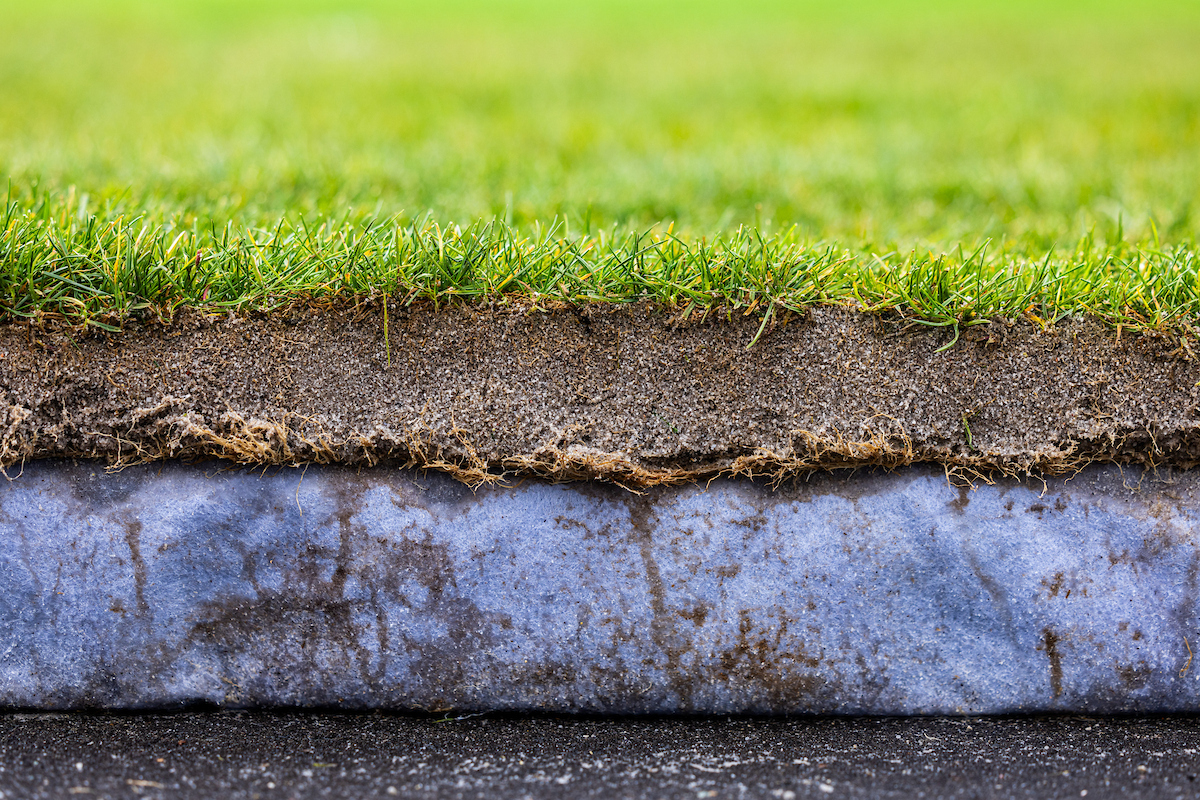
UT turfgrass research already scoring benefits on the world stage
When FIFA selected the University of Tennessee to oversee research for building and maintaining the FIFA WORLD CUP 26™ pitches, it promised to focus worldwide attention on the university’s turfgrass science and management program. With the opening games just weeks away, UT’s collaboration with the Fédération Internationale de Football Association has already brought new recognition to the acclaimed turfgrass program.
The research—led by John Sorochan, who is the Distinguished Professor of Turfgrass Science and Management in the UT Department of Plant Sciences—is also yielding information that will result in improved parks, recreation fields and sports turfs at schools and universities.
“It’s been an incredibly important initiative,” says Keith Carver, UT Institute of Agriculture senior vice chancellor and senior vice president. “It takes the work of our faculty and researchers to audiences all over the world. But, in an equally important manner, our work with FIFA has ushered in new advances to turfgrass that have improved golf courses, yards and gardens all over the Volunteer State. The impact of this research reaches far and wide.”
In 2021, FIFA initiated a five-year project with UT and Michigan State University for help in producing optimum playing surfaces for the 16 stadiums and nearly 150 practice fields for FIFA WORLD CUP 26. Forty-eight national teams will play at venues in Canada, Mexico and the U.S., spanning four time zones and multiple climatic regions.
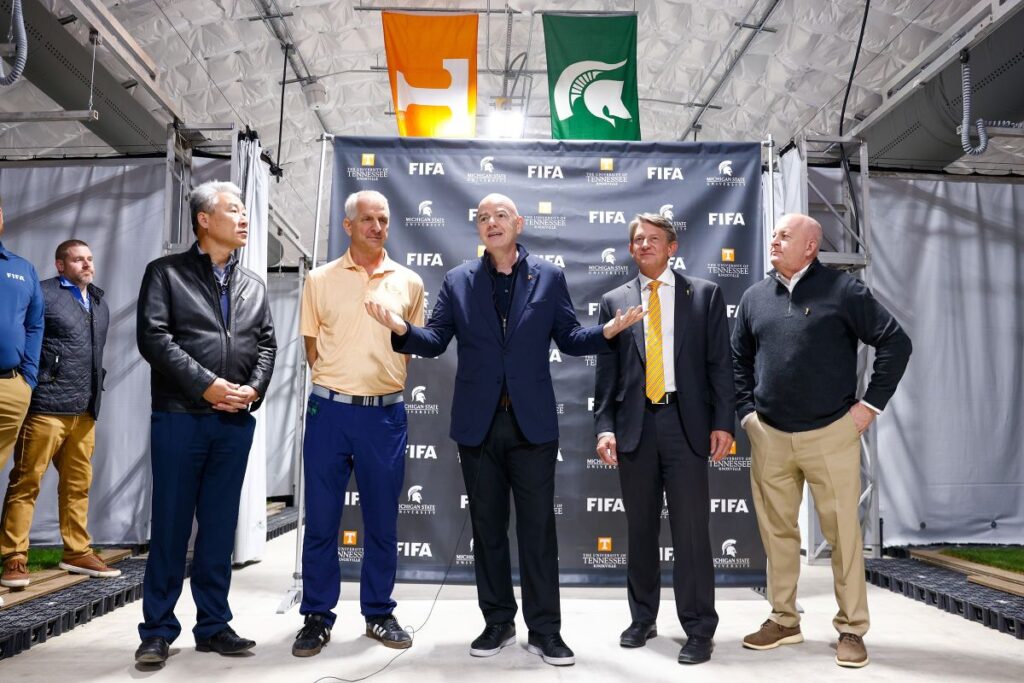
Since then, UT researchers have been growing test plots of grass, experimenting with ways of installing grass over different surfaces in varying conditions and testing surfaces for the best playing and safety conditions. FIFA funded the construction of climate-controlled test fields at the Plant Sciences Unit of the UT East Tennessee AgResearch and Education Center in Knoxville.
Alan Ferguson, FIFA senior pitch management manager, says the university’s research was used in the inaugural Club World Cup, an international competition organized by FIFA, held last summer at a dozen stadiums across the U.S.
“The UT turf team is well known around the world for high-quality research,” Ferguson says. “With so many key technologies already under research at UT, it made sense for FIFA to partner and extend this research.”
The UT turfgrass science and management program is expanding in other ways, as well. UT is establishing certificate programs for pitch managers, golf course superintendents and those who oversee other sports venues. The UT Herbert College of Agriculture is working to launch one or more certificate programs for turfgrass science, including specializations for sports turf. The program is intended to have a state, national and global audience and will be open to current college students.
UT Extension currently offers the non-credit, online Certified Lawn Care Professional Program on general turfgrass management. The program is tailored for working professionals who want to deepen their knowledge of regional turfgrass management and who do not need or intend to use the training for a college certificate or degree program. Participants in this program do not have to submit homework or take quizzes and exams, or develop other types of work typically associated with college programs. Participants who finish the program receive a certificate of completion from UT Extension, though no college credit or transcripts are earned.
UT also is investing in additional turf research fields, which Sorochan says could be used to test specific technologies like heating systems, vacuum ventilation and subsurface irrigation.
Learn more about these efforts, the benefits they are bringing to athletic playing surfaces throughout Tennessee, and the first-class opportunities they are bringing to turfgrass science and management students in an article in UTIA’s Land, Life and Science magazine.