UTIA entomologist recommends smashing eggs before they hatch in spring
KNOXVILLE, Tenn. – The invasive spotted lanternfly, which can cause damage to many plants, has been detected in a few Tennessee counties, but all residents can help stop the spread by looking for and destroying egg masses before they hatch in the spring.
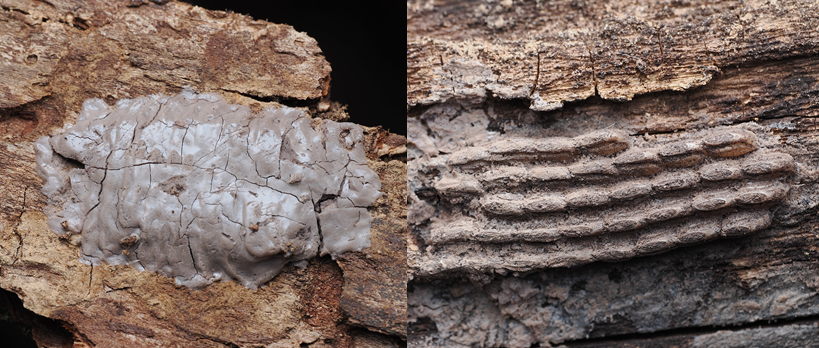
The adult female spotted lanternfly lays egg masses in September through November on host plants and other smooth surfaces, such as railroad ties, rocks, lumber, downed limbs and logs. Egg masses survive cold winter temperatures, and the first instar nymphs begin emerging in the spring. The nymphs mature through the spring and early summer before becoming adults in the beginning of June. The first, second and third instars feed on a variety of host plants. The fourth instars and adults prefer tree of heaven, grapes, black walnut, silver maple, red maple and willow.
“The best way to control spotted lanternfly outbreaks is to prevent them,” says Midhula Gireesh, assistant professor and University of Tennessee Extension specialist in the Department of Entomology and Plant Pathology. “Careful inspection for egg masses should be made on many types of products stored outdoors, such as firewood and lumber, before they are moved and shipped or before shipments are accepted. Since eggs start hatching at the end of March, now is a good time to scout for egg masses and destroy them.”
Each egg masses typically contain up to 60 eggs and are brown with a gray waxy covering. They are arranged in rows and over time, the waxy covering can weather and disintegrate, exposing the eggs.
To destroy the eggs Gireesh recommends using a scraper card or old credit card to crush the eggs while scraping them into a container filled with soapy water or hand sanitizer. Each egg must be crushed when removed from its hiding place. Eggs can still hatch if scraped off a tree and left on the ground. Be sure to crush nymphs and adults.
Spotted lanternfly is native to China, India and Vietnam and was first detected in the United States in Pennsylvania in 2014. The Tennessee Department of Agriculture confirmed spotted lanternfly in Davidson County in 2023, and it has also been confirmed in other Tennessee counties including Wilson, Sumner, Hamilton, Jefferson, Sullivan and Knox as of late 2025.
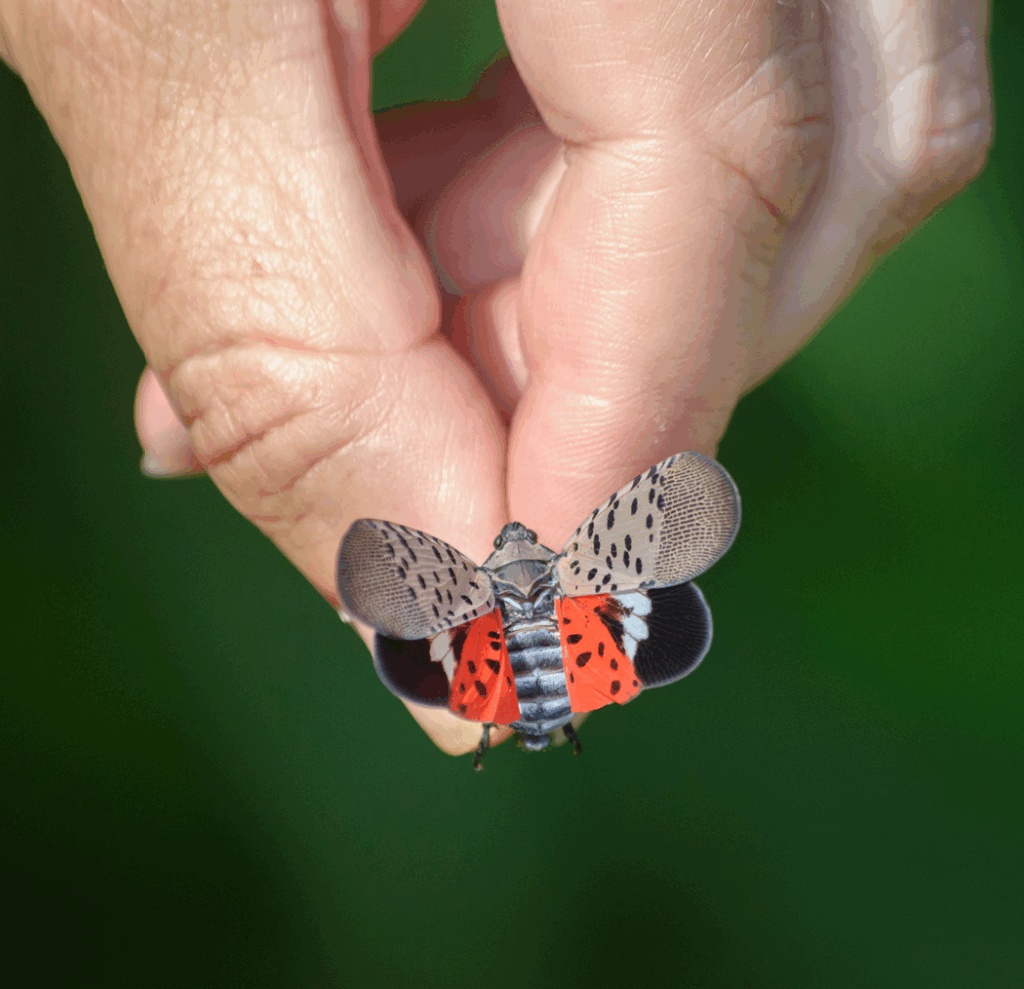
The adult insect is brightly colored with red, brown, black and white on its wings and a black and yellow body. Spotted lanternflies can damage plants with piercing and sucking mouthparts, especially when large numbers feed on a single plant. They also cause indirect damage when adults and nymphs excrete honeydew as they feed. The sugary honeydew can promote growth of fungal mats of sooty mold at the base of trees, fruit, and on the foliage of plants which in turn make plants susceptible to other insects and disease-causing organisms.
If you see an insect or egg mass you suspect is a spotted lanternfly, please notify the Tennessee Department of Agriculture through an online form: tn.gov/protecttnforests/resources/report-a-pest.html.
For information on spotted lanternfly life stages and lookalikes, refer to the Southern Spotted Lanternfly Working Group website: southernslf.org.
For more information, refer to UT Extension publication “Spotted Lanternfly” at tiny.utk.edu/W1032.
The University of Tennessee Institute of Agriculture is comprised of the Herbert College of Agriculture, UT College of Veterinary Medicine, UT AgResearch and UT Extension. Through its land-grant mission of teaching, research and outreach, the Institute touches lives and provides Real. Life. Solutions. to Tennesseans and beyond. utia.tennessee.edu.