
Director of the Center for Renewable Carbon co-leader of BRIDGES
The University of Tennessee, Knoxville, is part of a team that has won up to $160 million over the next ten years from the National Science Foundation for the BRIDGES Engine, a collaborative initiative that will generate millions of dollars in additional annual income for Tennessee farmers and create thousands of jobs across the state. BRIDGES, one of only 12 winning proposals from 300 pre-proposals and more than 70 full proposals, is a winner in NSF’s Regional Innovation Engines competition, established to advance transdisciplinary, collaborative research development and spur opportunities in regions that have not benefited significantly from recent technology booms.
BRIDGES is designed to transform underused farmland in rural areas of Tennessee and Alabama into launchpads for biobased innovation by growing specially developed perennial grasses and turning those grasses into high-demand automotive, construction and packaging products. The Engine is led jointly by the University of Tennessee, the HudsonAlpha Institute for Biotechnology, Auburn University, AGgrow Tech LLC and long-standing UT partner Volkswagen Group of America.
Biobased manufacturing is a long-term research strength at UT, with faculty demonstrating expertise and leadership at every level of the supply chain. BRIDGES leverages the five-year $20 million investment made by UT and Oak Ridge National Laboratory in 2024 to accelerate world-leading circular bioeconomy innovation in Tennessee.
“We are grateful to NSF for recognizing this ambitious project and the impact it will have on the industries and communities of Tennessee and the southeast,” said UT Chancellor Donde Plowman. “Working alongside our partners on this bold, collaborative initiative is an example of the value a great land-grant public research university can bring to the state, and it is why we continue to emphasize research that makes life better for the people of Tennessee and beyond.”
Growing new opportunities in rural areas
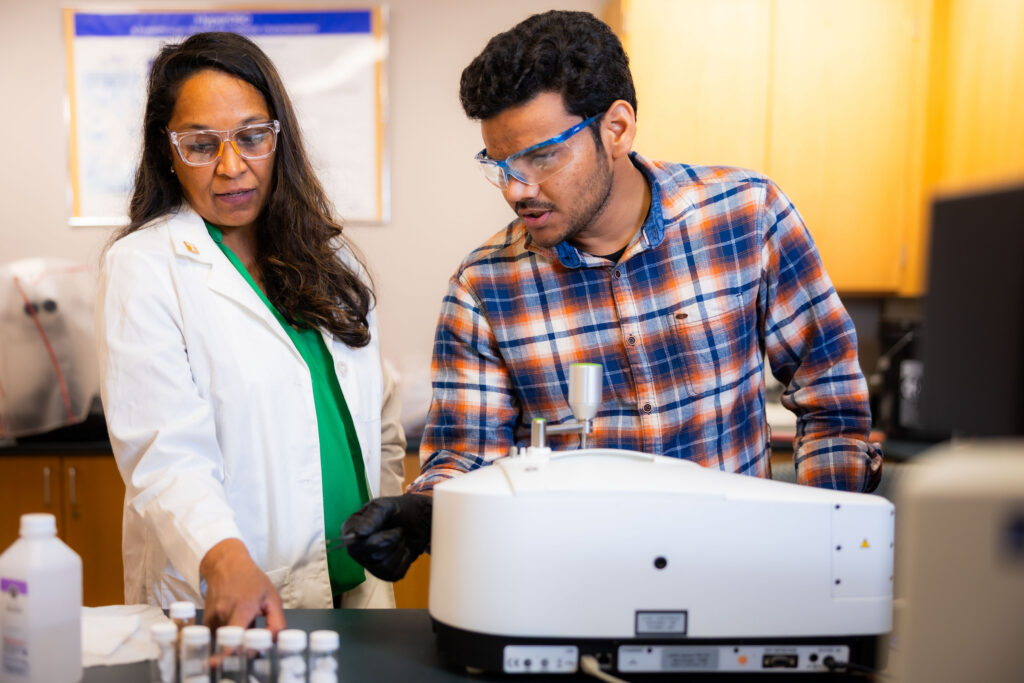
BRIDGES will tackle critical issues facing rural America, including the need for more robust agricultural markets, greater economic diversification and better job opportunities.
The BRIDGES team estimates that the initiative will generate tens of millions of dollars in additional annual income for Tennessee and Alabama farmers. Bioproduct manufacturing is expected to attract more than $2 billion in private capital investment and create thousands of better and higher-paying manufacturing and supply chain jobs. More than 10,000 people are projected to engage in technical, agricultural and manufacturing workforce development and training.
BRIDGES will advance the full life cycle of biobased products, including research and development, commercialization and scaling, education and workforce development, and regional engagement.
“This award shows that NSF recognizes the strength of the plans our team has developed that will drive lasting economic development across rural Alabama and Tennessee,” said BRIDGES Engine CEO Sam Jackson.
The State of Tennessee also recognizes BRIDGES’ potential. The Tennessee Department of Economic and Community Development has awarded a grant of $10 million from the state’s Federal Innovation Grant Matching Fund to support the initiative.
“Congratulations to the University of Tennessee and the entire BRIDGES coalition on this tremendous achievement,” said Deputy Governor and TNECD Commissioner Stuart C. McWhorter. “Tennessee is proud to support this initiative through TNECD’s Federal Innovation Grant Matching Fund, which helps our research institutions compete for transformational federal investments. The BRIDGES Engine demonstrates how strategic partnerships between higher education, industry and government can translate cutting-edge research into real-world, economic opportunity, and we look forward to seeing how this funding creates new markets for Tennessee farmers, advances biobased manufacturing and generates high-quality jobs across our rural communities.”
Building on UT’s strengths
“This effort is exemplary of the university and the UT Institute of Agriculture’s land-grant mission to provide real-life solutions,” said Keith Carver, senior vice chancellor and senior vice president of the UT Institute of Agriculture. “From performing fundamental research in our labs to applying the science to develop on-farm production and manufacturing solutions, the BRIDGES work will enhance economic development across Tennessee and Alabama.”
Nicole Labbé, Institute Professor and director of the Center for Renewable Carbon in the UT Institute of Agriculture, is a co-principal investigator for BRIDGES. “Each co-lead institution brings complementary expertise to the table,” she said. “UT’s key strength lies in converting biomass into bioproducts.”
UT also brings active relationships with packaging and automotive partners. Labbé cited the importance of identifying multiple applications for biobased materials. “To succeed, BRIDGES will support the development of not just one product but a portfolio of products relevant to multiple industries,” she said.
Cultivating an innovation ecosystem that lasts
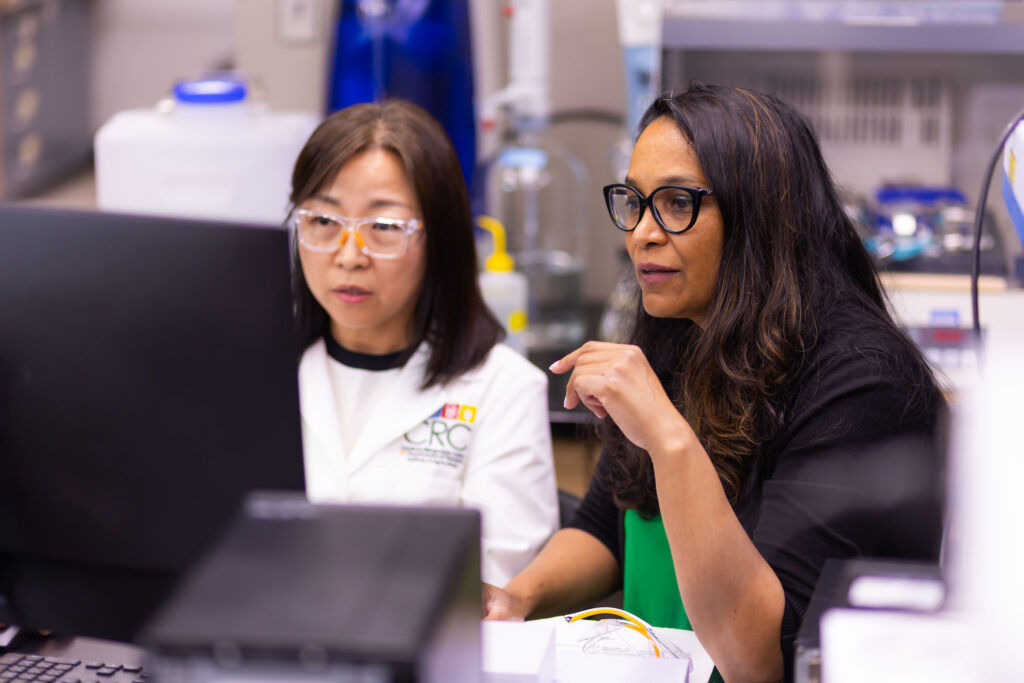
BRIDGES has built a collaborative ecosystem of 85 members, including 18 academic research institutions, 15 stakeholder groups, 10 commercialization partners and 42 industry partners ranging from start-ups to established corporations. This interconnected network will ensure that research is relevant, solutions are practical and impact is widespread.
Industry needs have been represented from the start with Volkswagen Group of America as a co-lead partner. “Through the BRIDGES Engine, Volkswagen Group of America is proud to collaborate with leading academic, industry and community partners to accelerate the development of biobased materials, create high-quality jobs and strengthen rural economies across the Southeast,” said Hendrik Mainka, principal program lead and head of Volkswagen Group Innovation Hub Knoxville, located in the UT Research Park at Cherokee Farm.
“We are developing the circular bioeconomy to meet the needs of current and future generations,” Labbé said. “That is the big picture. With the NSF award, the BRIDGES Engine is bringing together all the puzzle pieces to accomplish that, allowing us all to better serve Tennessee communities.”
The University of Tennessee Institute of Agriculture is comprised of the Herbert College of Agriculture, UT College of Veterinary Medicine, UT AgResearch and UT Extension. Through its land-grant mission of teaching, research and outreach, the Institute touches lives and provides Real. Life. Solutions. to Tennesseans and beyond. utia.tennessee.edu.
For more details: