UT Gardens’ April Plant of the Month
Submitted by Holly Jones, Horticulturist, UT Gardens, Knoxville
KNOXVILLE, Tenn. – The first time I grew sweet bell peppers (Capsicum annuum) I assumed that I would get an abundance of large, gleaming, blemish-free, thick-walled red fruit just like the ones at the grocery store. Like many things in life, my experience was different from my expectations. My plants did flower and set fruit, but those peppers took an extremely long time to turn red. While I was waiting impatiently, most of them became damaged by sun scald, foraging birds, nibbling mice and stink bugs. I was so disappointed. Luckily, I’m open to experimentation, and I discovered a solution—miniature sweet peppers! While these tasty little peppers don’t reach the magnificent size of the grocery-store selections, which it turns out are grown in climate-controlled greenhouses, they taste just as good and are generally easier to produce in the home garden.
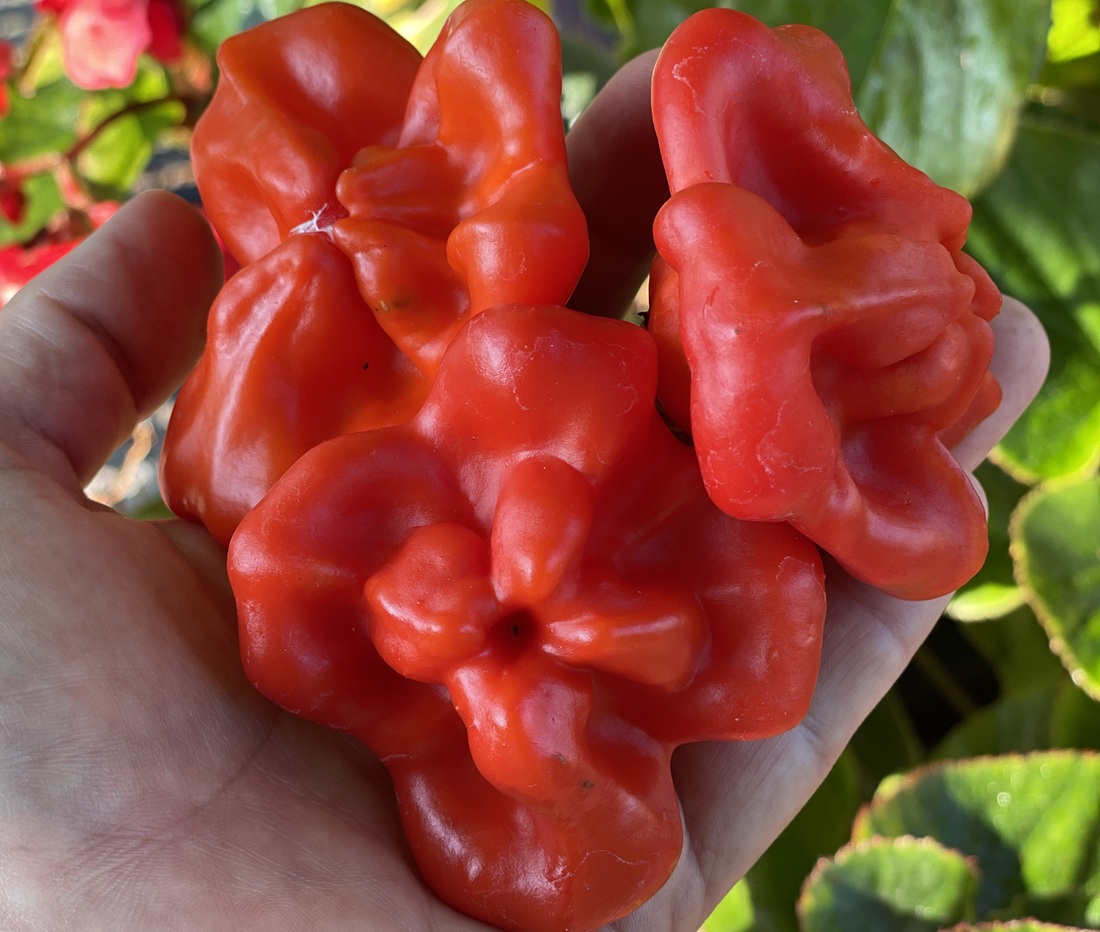
Smaller fruit means less sun scald because the leaves serve as a shield, and more surface area by volume allows the fruit to ripen faster, which minimizes exposure to pests. Most of the high quality, commercially available miniature sweet peppers like ‘Pretty N Sweet’ and ‘Pick-N-Pop Yellow’ are F1 hybrids of Capsicum annuum, meaning the plants will display desirable qualities but the seeds cannot be relied on for future use. But there are seed-saver-friendly, open-pollinated versions as well, like ‘Mini Bell Mix’ and ‘Miniature Yellow Bells’. There also are completely different species to try. Capsicum baccatum, commonly called ‘Mad Hatter’ or ‘Bishop’s Hat’, are delicious, bizarrely shaped little peppers that provide an impressive harvest as well as a conversation starter in your garden. And finally, one of my personal favorites is Capsicum chinense ‘Roulette’ F1, which looks exactly like a blazing hot habanero but has no heat at all. They are incredibly productive and allow you to enjoy the subtle fruity flavors of a habanero without the burn.
No matter which one you choose, you will be pleasantly surprised by the delicious flavors, ease of growth and the ornamental value of miniature sweet peppers. They all enjoy similar growing conditions, including six or more hours of direct sunlight, well-drained fertile soil and sufficient water, and most will benefit from a small cage like a standard metal “tomato” cage or a stake of some kind to keep them upright. Pick-N-Pop Yellow will be included in the kitchen garden display at UT Gardens, Knoxville, this year. UT Gardens, Jackson, displays various vegetables as well through the All-America Selections display and UT Extension Home Garden Variety Trials.
The UT Gardens includes plant collections located in Knoxville, Crossville and Jackson, Tennessee. Designated as the official botanical garden for the State of Tennessee, the UT Gardens are part of the UT Institute of Agriculture. The Gardens’ mission is to foster appreciation, education and stewardship of plants through garden displays, educational programs and research trials. The Gardens are open during all seasons and free to the public. For more information, see the Gardens website: utgardens.tennessee.edu.
The University of Tennessee Institute of Agriculture is comprised of the Herbert College of Agriculture, UT College of Veterinary Medicine, UT AgResearch and UT Extension. Through its land-grant mission of teaching, research and outreach, the Institute touches lives and provides Real. Life. Solutions. to Tennesseans and beyond. utia.tennessee.edu.