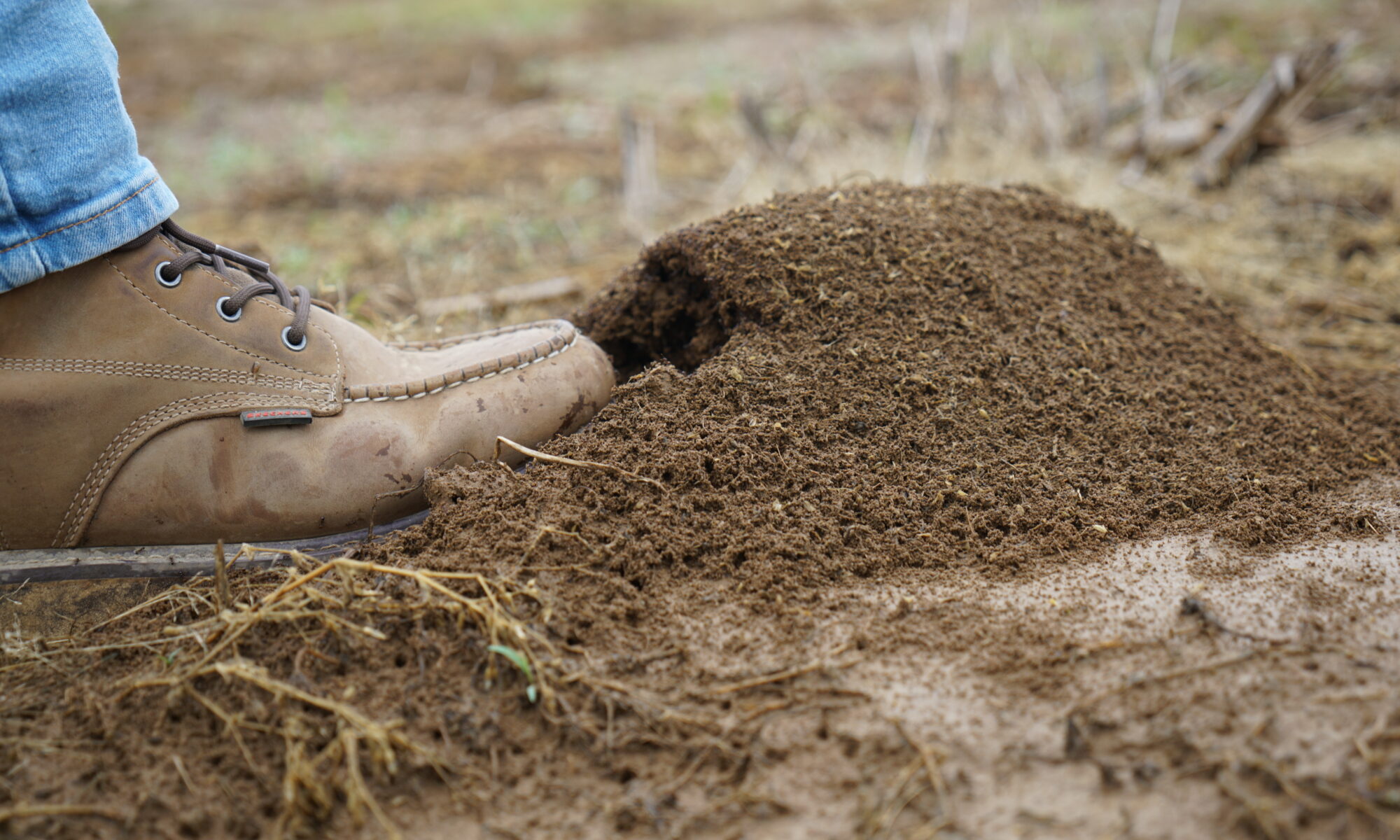
Insects could cause life-threatening allergic reactions
KNOXVILLE, Tenn. – Fire ants are a common nuisance across Tennessee, known for their painful stings and unsightly dirt mounds in lawns and outdoor spaces. However, for individuals who are allergic, these pests can cause potentially life-threatening reactions. To help keep communities safe this summer, University of Tennessee Extension is sharing tips for effective fire ant control.
“Anaphylaxis from insect stings can be fatal, meaning we should all do our part in implementing management solutions,” says Karen Vail, urban entomology Extension specialist. “For homeowners with fewer than 20 mounds per acre, the easiest option is single-mound treatments with fire ant bait.”
Baits can be purchased at lawn and garden stores and should only be used while fresh. Using a measuring device, apply the recommended amount around the mound, but not directly on top. Applications are most effective when temperatures are between 70 and 85 degrees Fahrenheit, with evening being the best time to apply bait during the summer.
Vail says insect baits should be administered when fire ants are foraging, or leaving the mound in search of food. “To determine whether bait is fresh and ants are foraging, place a small amount of oily food, such as bits of hot dog or potato chips, next to the mound. Near these food items, place a small amount of bait. After 30 minutes, check both piles to see whether ants are present. If they feed only on the food, then the bait is rancid and should be replaced prior to application.”
Do not apply bait after a mound has been mowed, as ants often prioritize repairing the structure rather than retrieving food. Similarly, avoid applying bait when rain is expected or in a heavy dew, as moisture can reduce effectiveness.
“Controlling fire ants is easier than you think, but it’s essential to use products correctly,” says Vail. “It’s against the law to apply baits in areas not listed on the label. You should also avoid contaminating baits by storing or mixing them with fertilizer, pesticides or other odorous compounds. Always store baits at room temperature in a sealed container. If ants are still active a few weeks after applying a fast-acting bait, retreatment using another technique may be needed, such as a granular, drench or dust application.”
For lawns with mound densities of more than 20 per acre, Vail recommends using a handheld broadcaster to apply bait over a large area rather than conducting individual mound treatments. Home treatment options, such as boiling water or flammable substances, can harm the applicator and are not recommended.
For more information on fire ant control, visit fireants.tennessee.edu or contact your local county Extension office.
The University of Tennessee Institute of Agriculture is comprised of the Herbert College of Agriculture, UT College of Veterinary Medicine, UT AgResearch and UT Extension. Through its land-grant mission of teaching, research and outreach, the Institute touches lives and provides Real. Life. Solutions. to Tennesseans and beyond. utia.tennessee.edu.