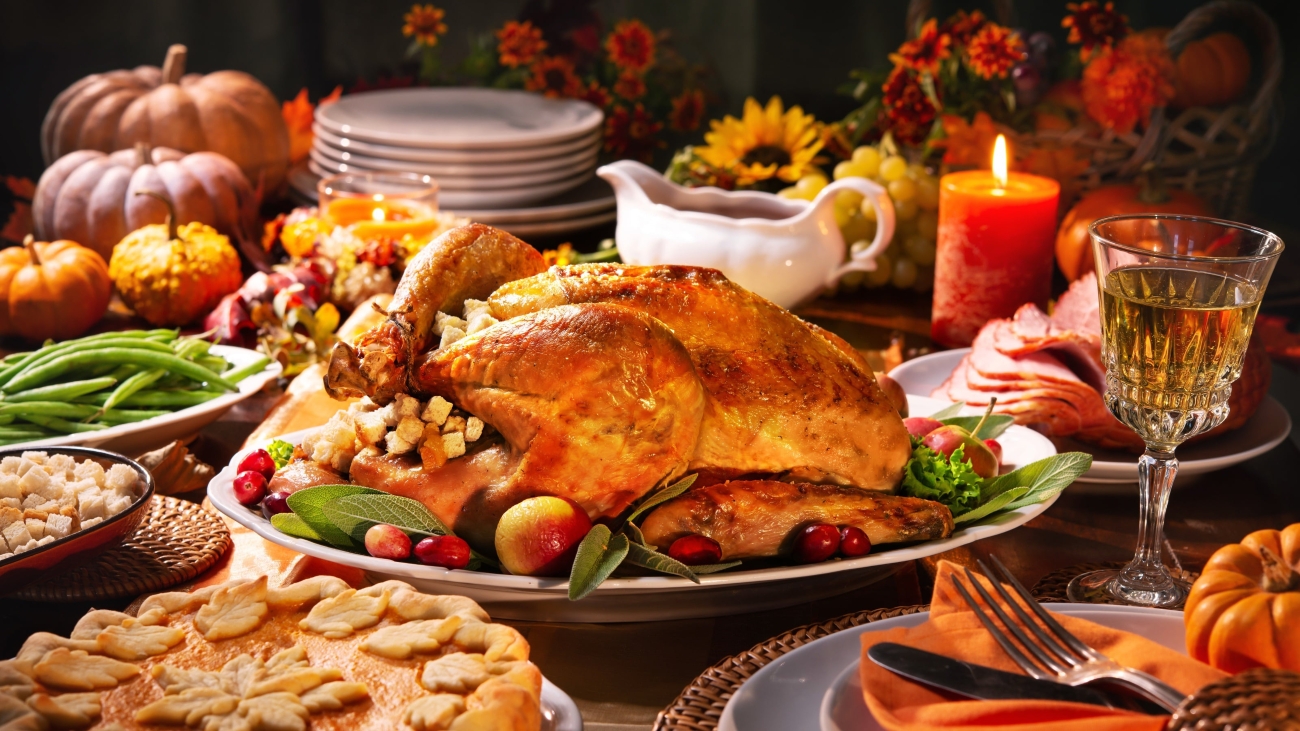
UT Extension professionals offer tips for saving on groceries and planning healthy meals
KNOXVILLE, Tenn. – As Tennessee families purchase food for their Thanksgiving dinner this year, there is some good news at the grocery checkout counter. The University of Tennessee Extension annual survey found some lower prices and an overall decrease in the total amount.
The UT Extension’s consumer economics leadership team determined that the average cost this year for a traditional Tennessee Thanksgiving dinner to serve 10 will be $121.15, a decrease of about 6% from last year’s $128.50, based on a survey of items purchased at grocery stores across the state. They found prices for turkey were up while ham prices were down, compared to last year.
In addition, UT Extension specialists recommend several tips for planning ahead, saving money and eating healthy foods for the holidays. Several publications about grocery shopping and holiday food preparation are available free to the public and available online at solutions.tennessee.edu.
Some prices are lower, some higher
Andrew Griffith, professor of agriculture and resource economics, said prices for poultry are up while prices for eggs are down. Eight-to-16-pound frozen whole hen prices at the wholesale level are up 13% from a year ago and will likely be trading between $1.80 and $1.90 per pound leading up to Thanksgiving. A similar price will be seen for 16-to-24-pound whole frozen turkey prices. The retail price of eggs in September was $2.27 per dozen, compared to $2.86 per dozen in November 2025. Additionally, the retail price of a gallon of milk is nearly unchanged compared to last year.
UT Extension’s consumer economics leadership team surveyed grocery stores across the state between October 31 and November 6 to find out how much families can expect to pay for the holiday meal. Their survey included 12 retail grocers from across Tennessee located in rural and urban locations, independently owned grocery stores, supercenters and conventional grocery stores.
The items on the shopping list included the main ingredients needed to serve traditional turkey (the team priced whole turkeys, not turkey breasts) and stuffing, cranberry sauce, ham, mashed potatoes, fresh vegetable tray, sweet potato casserole, green bean casserole, English pea salad, deviled eggs, pumpkin pie with whipped cream and rolls. Some families may serve cornbread dressing (ingredients not included in the shopping list) instead of stuffing and may serve creamed peas instead of English pea salad.
At the time the survey was conducted, the total cost of the holiday meal was $121.15 with a cost per person of $12.11. In 2025, the total cost of the complete meal for 10 was $128.50. Team members said consumers may be able to find better prices closer to the holiday.
The featured items for the holiday meal and usually the items that take the greatest portion of the meal budget—the turkey and the ham—averaged $30.85 for turkey and $18.39 for ham this year. Last year, these items also took a good portion of the meal budget, with turkey averaging $27.37 and ham averaging $26.24.
Supercenters and some conventional supermarkets are offering meal packages that are an option, but these market basket deals may include items you may or may not want to serve or may not include the items you traditionally serve at the holiday meal. Always plan your holiday meal before you head to the grocery store and take advantage of specials and coupons on items on your list.
Tips for healthy meals and cost savings
Thanksgiving and rich, flavorful foods go hand-in hand, but our bodies need good nutrition, even on Thanksgiving! Consider adding a fresh vegetable tray to your holiday meal plan or replacing one of the richer dishes for one of these. A fresh vegetable tray was included in the prices collected.
Kristen Johnson, associate professor and nutrition specialist, offers the following tips to help you make healthy choices while you enjoy the holiday:
- Fill up your plate with foods that are full of nutrients like fruits and vegetables. These foods are naturally low in calories and saturated fats and high in vitamins, minerals and fiber.
- Remember that Thanksgiving is about more than delicious food. Focus on the other aspects of this holiday by practicing gratitude and focusing on quality time spent with friends, families and people close to us.
- Eat nutritious foods throughout the day. Avoid skipping meals to “save up” for the holiday meal. You will be more likely to overeat when you are very hungry.
- Eat mindfully. Take time to enjoy the flavors, texture and aromas of Thanksgiving dishes. Listen to your body’s cues and stop eating when you sense you are full. This can help you avoid getting more calories from your meal than your body needs and can also keep you from feeling “stuffed” and sluggish after the meal.
- Balance Thanksgiving “treats” with nutritious foods. Thanksgiving meals are full of delicious foods that are part of our traditions and celebrations. Enjoy your Thanksgiving dishes that are important to you while balancing them with fruits, vegetables, whole grains, dairy, and other nutritious foods.
Learn more about how to eat and plan healthy holiday meals and how to save at the grocery with UT Extension publications at solutions.tennessee.edu. Use key words to search topics.
Here are some publications we recommend:
Food Preparation
Planning a Holiday Meal
Making the Most of Your Holiday Leftovers
Food Safety for Holiday Gatherings
Cost Savings
Meal Planning Made Easy
Managing Your Food Budget for Savings
Grocery List Basics: Plan to Save
The University of Tennessee Institute of Agriculture is comprised of the Herbert College of Agriculture, UT College of Veterinary Medicine, UT AgResearch and UT Extension. Through its land-grant mission of teaching, research and outreach, the Institute touches lives and provides Real. Life. Solutions. to Tennesseans and beyond. utia.tennessee.edu.