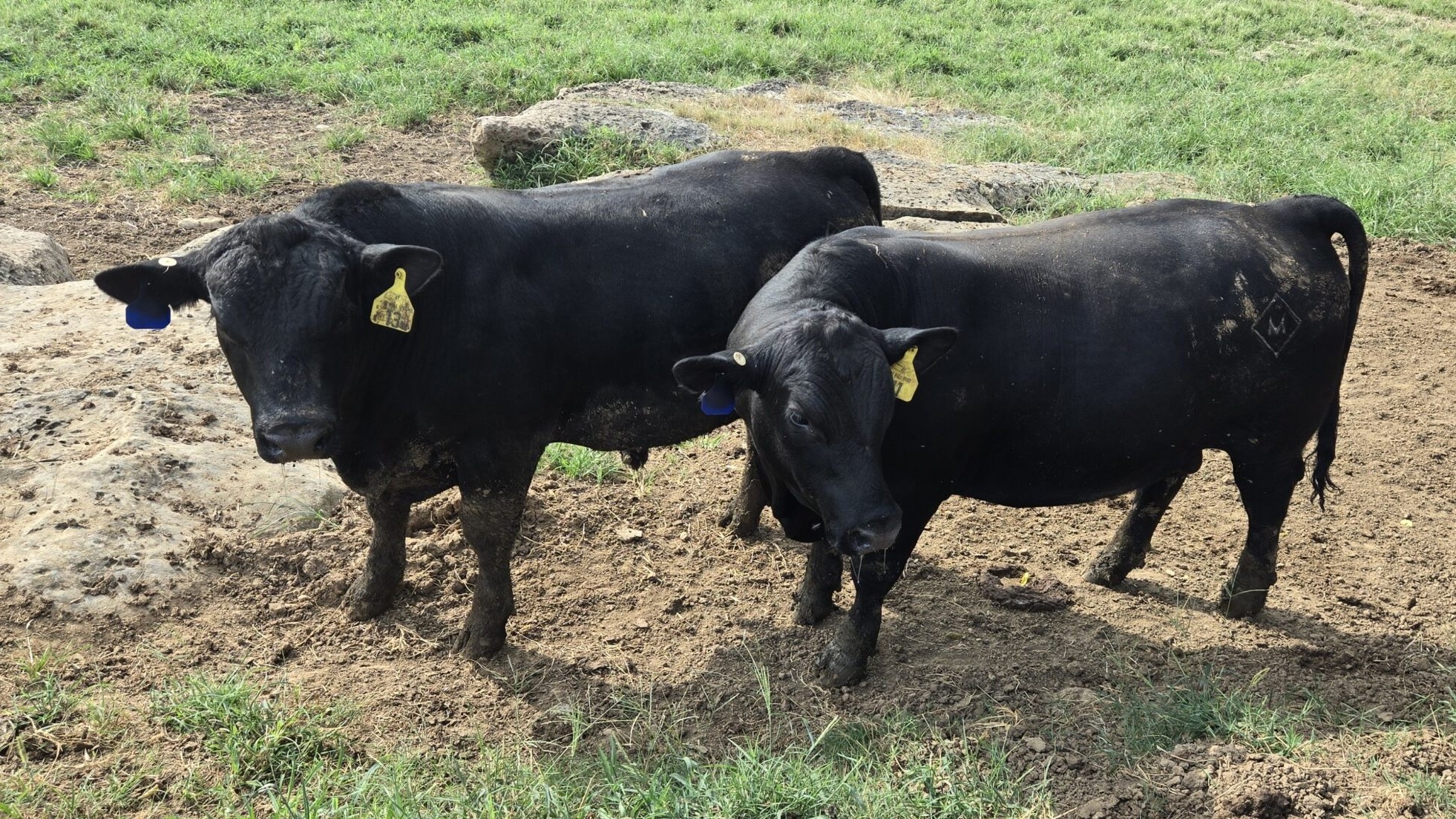
UTIA testing program brings objective information and evaluation together
KNOXVILLE, Tenn. – The University of Tennessee Institute of Agriculture will host its 2026 Performance Tested Bull Sale at noon CST on Thursday, December 10, at the Middle Tennessee AgResearch and Education Center at Lewisburg.
The sale is the culmination of the UT Bull Development and Evaluation Program, which provides beef producers with independently collected performance and genetic information to support more confident herd-improvement decisions.
This year’s group reflects the work and commitment of consignors from across Tennessee and the region. Eighty-nine bulls representing Angus, Red Angus, SimAngus, Hereford and Simmental genetics completed the 84-day evaluation. The test is designed to measure post-weaning growth under a common management environment while documenting structural and phenotypic traits that matter in commercial beef production.
“As test director, I value the program because it brings objective information and practical cattle evaluation together. A bull purchase is a long-term investment in a cow herd, and this program gives buyers an opportunity to evaluate performance records, genomically enhanced expected progeny differences (EPDs), structure and disposition in one setting. The goal is not simply to identify high-gaining bulls, but to help producers find cattle that fit their operation, marketing plan and breeding objectives,” said Saulo Zoca, assistant professor of animal science and Extension beef cattle specialist.
The 2026 class posted a strong overall performance record. Bulls averaged 1,221 pounds at the end of the test. The group gained approximately 3.0 pounds per day across the full 84-day test. Their average weight-per-day-of-age (WDA) was 3.16 pounds.
| Breed group | Number of bulls | Final weight, lb. | 84-day ADG, lb. | WDA, lb. |
| Angus | 51 | 1,250 | 2.99 | 3.16 |
| Red Angus | 1 | 1,010 | 1.76 | 2.64 |
| Hereford | 6 | 1,066 | 2.78 | 2.93 |
| All Sim blood | 31 | 1,209 | 3.05 | 3.23 |
| Simmental | 8 | 1,159 | 2.98 | 3.22 |
| SimAngus | 23 | 1,227 | 3.08 | 3.23 |
| Overall | 89 | 1,221 | 2.98 | 3.16 |
The results also show the value of evaluating cattle across breed groups and production goals. SimAngus bulls led the group for the 84-day average daily gain at 3.08 pounds. Angus bulls, the largest breed group in the test, averaged 1,250 pounds at the conclusion of the evaluation. Buyers will have access to individual performance records, frame scores, foot and claw scores, ultrasound information as available and breed-specific genomic EPDs in the sale catalog.
Bulls offered in the sale must meet the program’s eligibility standards, including performance requirements and a breeding soundness examination before sale day. This disciplined approach is fundamental to the program. It provides buyers with a uniform, transparent source of bulls while giving consignors meaningful feedback for selection and breeding decisions.
The sale will be held at the Middle Tennessee AgResearch and Education Center at Lewisburg, 1070 New Lake Road, with online bidding available through LiveAuctions.tv. A printed catalog and additional program information are available through the UT Beef website at tiny.utk.edu/bulltest.
“I encourage commercial cattle producers and seedstock breeders to study the catalog, compare the data to their herd needs and join us December 10,” Zoca said. “Whether a producer is seeking calving ease, growth, maternal value, carcass merit or balanced genetics, the sale offers an opportunity to invest in performance-tested bulls backed by University of Tennessee evaluation.”
For more information, contact test directors, Saulo Zoca, at szoca@utk.edu or 931-486-2129, or Troy Rowan at trowan@utk.edu or 865-974-3190.
The University of Tennessee Institute of Agriculture is comprised of the Herbert College of Agriculture, UT College of Veterinary Medicine, UT AgResearch and UT Extension. Through its land-grant mission of teaching, research and outreach, the Institute touches lives and provides Real. Life. Solutions. to Tennesseans and beyond. utia.tennessee.edu.