Study examines wine origin and quality attributes
KNOXVILLE, Tenn. — What do you look for when you buy wine? Is price the main consideration? Or do you notice quality logos, region of production or alcohol content? Researchers at the University of Tennessee Institute of Agriculture are studying how these attributes affect your decision. Their goal is to identify attributes Tennessee residents and visitors prefer when evaluating wines produced in the state.
In 2024, a research team from the UTIA Department of Agricultural and Resource Economics recevied a grant from the USDA Agricultural Marketing Service to examine how wineries utilize social media marketing to promote their wines and vineyards. In 2026, the research team received an additional $189,000 in funding to extend the original study for two years. The expansion allows the team to collect additional data to examine how wine buyers value the new Tennessee Quality Assurance Program (QAP) logo, the alcohol content of the product, and whether the wine originated from grapes from an American Viticultural Area (AVA) in Tennessee. Eye-tracking technology from the Department of Agricultural and Resource Economics’ REM (Research, Extension, Marketing) Lab will also assess the effectiveness of promotions and products at gaining customers’ attention.
In 2023, Tennessee’s Wine and Grape Board created the Tennessee Quality Assurance Program (QAP) as a way to improve the quality of wine produced in the state and promote the wine industry. Additionally, the state has four AVA’s, with the most recent being the Nine Lakes of East Tennessee, established in March 2026. Preliminary results show that quality assurance and location of production matter. Team leader Karen DeLong, professor of agricultural and resource economics, says a survey the team recently conducted of 825 potential wine buyers indicates that consumers are willing to pay more per bottle for wine that features a Tennessee QAP label. Consumers also indicated they would pay premiums for wines sourced from one of the four AVAs in Tennessee. Regarding alcohol content, preliminary survey results indicate consumers prefer higher alcohol content wines compared to lower ones. However, the survey required participants to be wine drinkers, which could explain this result considering the increased popularity of low and non-alcohol beverages, says DeLong.
“Overall, preliminary findings show that quality certification, AVAs and alcohol content definitely influence consumers’ valuation of wines,” said DeLong. “Our research shows that the new QAP logo and sourcing grapes from a Tennessee AVA will help increase consumer willingness to pay for Tennessee wines.”
Over seventy wineries are scattered across Tennessee and the research team estimated in a recent report to the Tennessee Wine and Grape Board that the economic impact of the wine industry on the Tennessee economy is $610 million. “Approximately 60 percent of these wineries are located in rural counties and can face unique marketing challenges compared with their metro winery counterparts,” DeLong explains. She adds that because these rural wineries rely more on sales from tourists, increased local wine sales could also bolster rural economies from spillover spending at other rural businesses, such as those in the hospitality industry.”
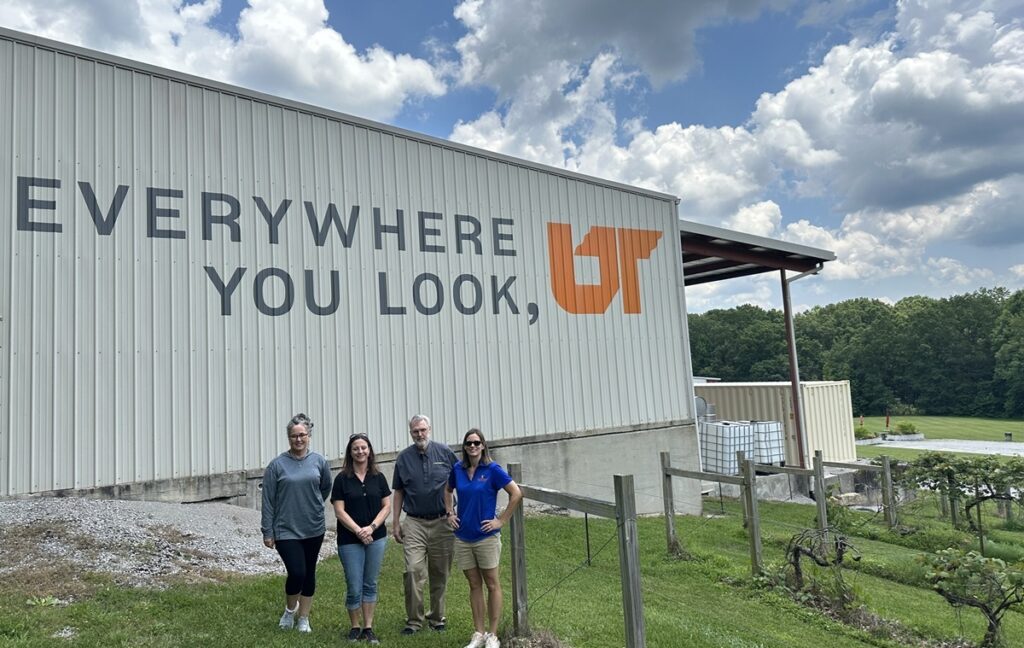
Along with DeLong, the research team will continue to include David Hughes and Alicia Rihn from the Department of Agricultural and Resource Economics (AREC). New to the effort is Mackenzie Gill, an assistant professor in AREC with a joint appointment in the Department of Nutrition. AREC graduate student, Olusola Adegbuyiro, was funded on the original grant and completed her master’s thesis on this project.
The Tennessee Farm Wine Growers Alliance, Tennessee Wine and Grape Board, Appalachian Region Wine Producers Association and others supported the original project and this grant extension. Results of this project are applicable for not only wineries throughout Tennessee, but for wineries throughout the United States, particularly those in emerging wine production areas.
The University of Tennessee Institute of Agriculture is comprised of the Herbert College of Agriculture, UT College of Veterinary Medicine, UT AgResearch and UT Extension. Through its land-grant mission of teaching, research and outreach, the Institute touches lives and provides Real. Life. Solutions. to Tennesseans and beyond. utia.tennessee.edu.