USDA NIFA–funded study will contribute data for guidelines for their safe use
KNOXVILLE, Tenn. — Among the next generation pest management tools being scrutinized for crop production are RNA interference (RNAi)–based biopesticides. A researcher with the University of Tennessee Department of Plant Sciences will lead a team to evaluate their value by examining the persistence of RNAi molecules in the environment after use.
Assistant Professor Tabibul Islam has received a grant from the USDA National Institute of Food and Agriculture of nearly $644,000 to generate first-of-its-kind data to record the environmental fate and ecotoxicological effects of novel RNAi-based biofungicides. The study will assist federal regulatory agencies in making evidence-based decisions about the effects of genetically engineered organisms in the environment.
RNAi biopesticides include the use of exogenous double-stranded RNA (dsRNA)—RNA that is external to an organism’s DNA strands—to induce sequence-specific gene-silencing mechanisms. RNAi from naturally occurring pests and pathogen-suppressing molecules is applied to plants or added to growing media including soils and water-based solutions. These biopesticides can include chitosan nanoparticles that are derived from chitin that occurs in insect exoskeletons and other natural sources. The chitosan nanoparticles are biodegradable, biocompatible and non-toxic cationic polymers that are already widely used for targeted, controlled-release drug delivery, gene therapy and antibacterial applications. They are also used to improve RNAi pesticide stability; however, the ultimate disposition of chitosan-RNAi complexes in the environment is not fully documented.
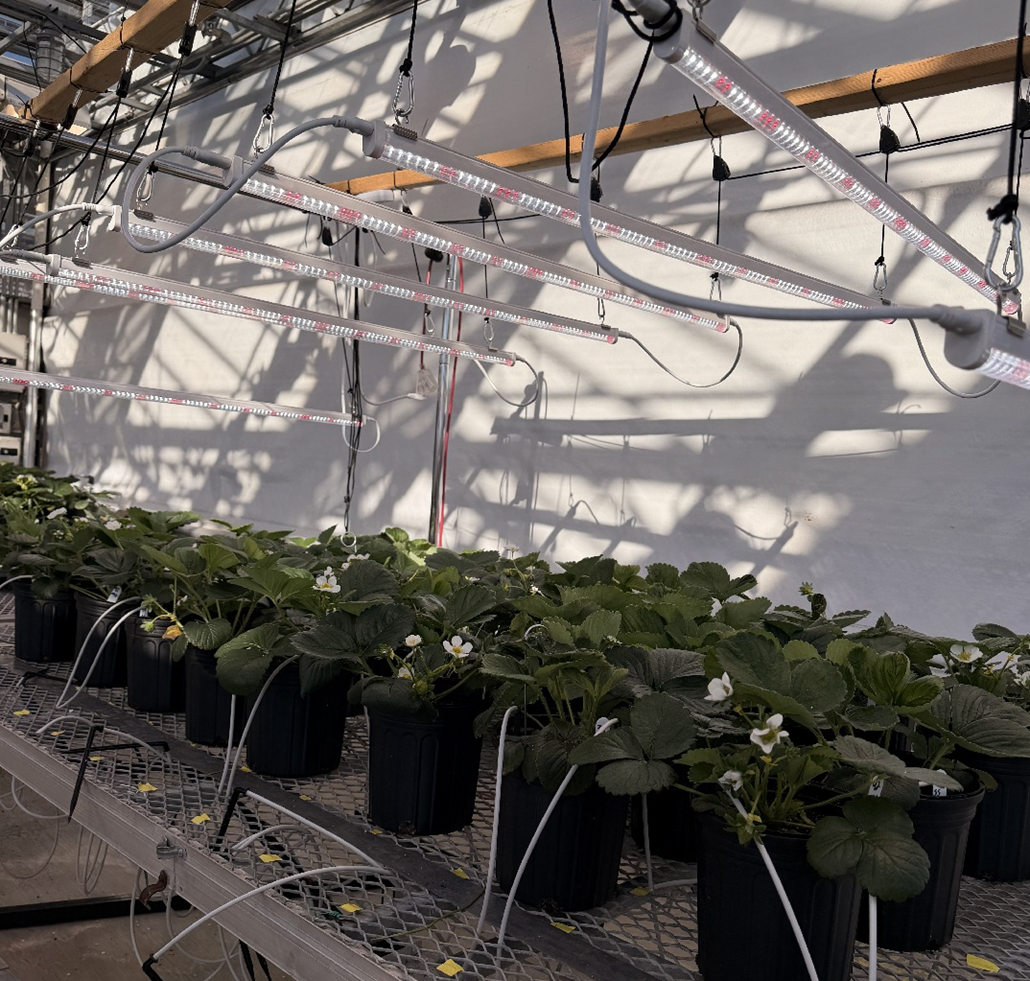
“The RNAi molecule’s persistence in controlled-environment agriculture is currently limited,” says Islam. “Knowledge of its effects and ultimate disposition in the environment is needed for proper evaluation by regulatory agencies. We will produce the first such data specifically for controlled environment agriculture production systems.” Controlled environment agriculture (CEA) production systems optimize plant growth by tightly managing environmental factors like light, temperature, humidity and nutrients within enclosed structures. These systems, including greenhouses and vertical farms, utilize technologies like hydroponics, aeroponics, and aquaponics to increase yields, reduce water usage and enable year-round, local production.
“Our project will determine the persistence of specific RNA structures in soils, soil-less substrates, and hydroponic crop production systems. Additionally we will evaluate whether the modifications have detrimental effects on the microbiota and beneficial microbes,” explains Islam. “Our findings will support the EPA, USDA and FDA in developing guidelines for the safe use of biofungicides.”
Islam adds that biopesticides are positioned to be an important tool for conventional and controlled environment agriculture that can strengthen our food security.
The study, “Monitoring the environmental fate and off-target effects of secondary structured RNAi biopesticides,” is part of a new series of grants from USDA National Institute of Food and Agriculture called the Biotechnology Risk Assessment Grants (BRAG) program. BRAG is co-administered by the Agricultural Research Service (ARS) and jointly funded by USDA-NIFA, USDA-ARS, and USDA-Forest Service and has invested $6.3 million in six projects, including this one, to support investigations of managed and natural environments across a wide breadth of organisms.
The University of Tennessee Institute of Agriculture is comprised of the Herbert College of Agriculture, UT College of Veterinary Medicine, UT AgResearch and UT Extension. Through its land-grant mission of teaching, research and outreach, the Institute touches lives and provides Real. Life. Solutions. to Tennesseans and beyond. utia.tennessee.edu