Project helps U.S. Department of Energy’s goal to reduce synthetic nitrogen emissions
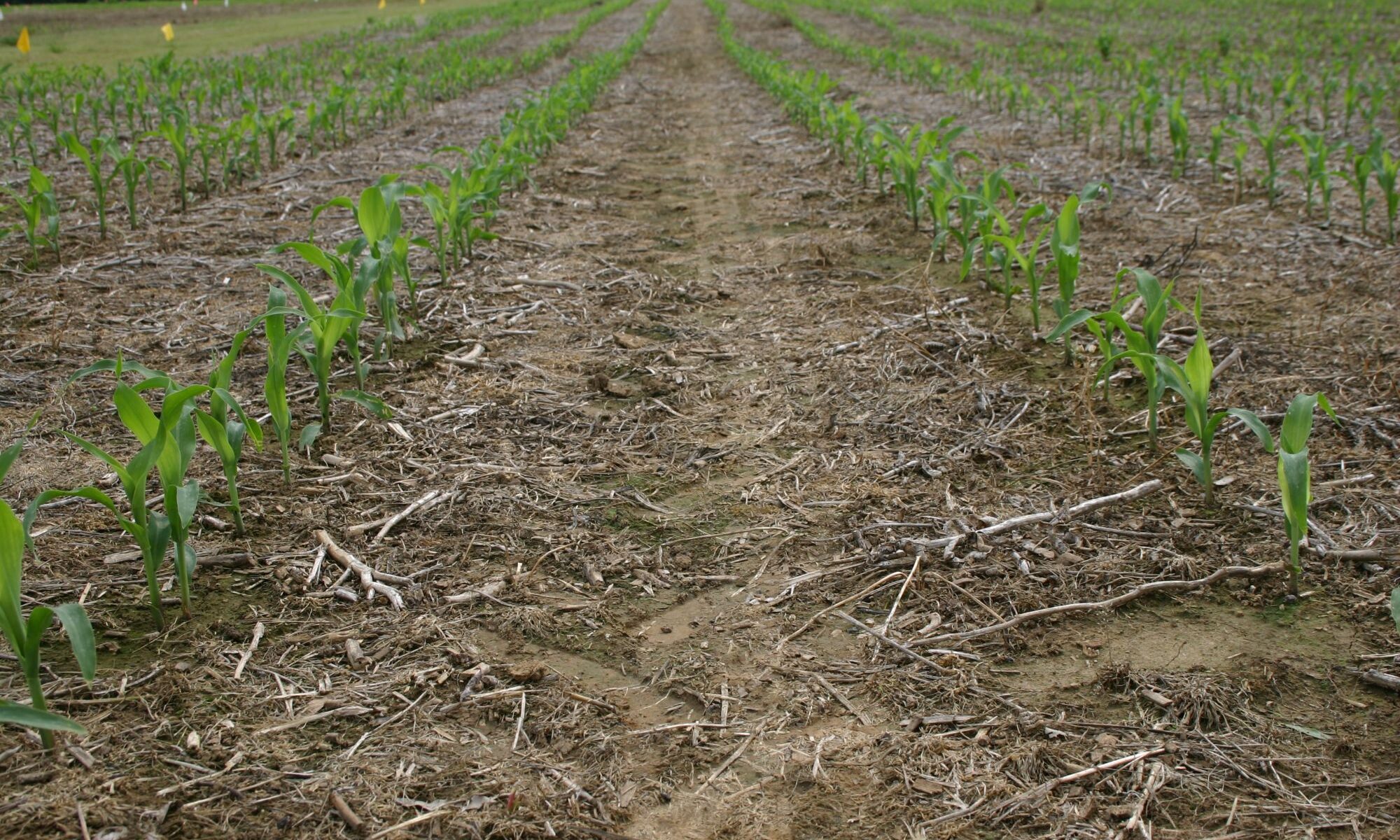
KNOXVILLE, Tenn. – A project led by University of Tennessee Institute of Agriculture researchers will help reduce the use of synthetic nitrogen fertilizer by designing corn plants that better use nitrogen already in the soil.
Scott Lenaghan, associate professor of food science, and Neal Stewart, professor of plant sciences, secured $2.5 million in funding from the U.S. Department of Energy Advanced Research Projects Agency-Energy (ARPA-E). Their project, “SyN-Fix: Synthetic Biology to Improve Nitrogen Cycling in the Maize Rhizosphere,” is one of nine awarded to develop technologies that reduce synthetic nitrogen fertilizer use in corn and sorghum farming, which are key crops for U.S. ethanol production.
The Technologies to Emend and Obviate SYnthetic Nitrogen’s Toll on Emissions (TEOSYNTE) program, part of ARPA-E, aims to reduce those fertilizers by implementing innovative solutions through the application of crop breeding, genetic engineering and microbial technologies that will reduce agriculture-related nitrous oxides emissions and lower operating costs for American farmers. By reducing the need for those fertilizers, TEOSYNTE projects could prevent up to 78 million metric tons of new emissions generated during nitrogen fertilizer production and save U.S. farmers as much as $6.4 billion in operational costs. The U.S. is the largest producer of corn with approximately 350 million metric tons produced annually.
Lenaghan and Stewart, who both serve as directors of the UT Center for Agricultural Synthetic Biology, which they co-founded in 2018, will bio-design corn, or maize, cultivars by using genetics to enable roots to produce key compounds to decrease emissions and optimize rooting patterns in corn. This will reduce the amount of nitrous oxide emitted from the soil, increase uptake of nitrogen in the soil and have no negative impact on crop yields.
“Nitrogen-based fertilizers account for roughly 5% of all global greenhouse gas emissions, and the use of petroleum to generate these fertilizers makes U.S. farmers susceptible to price fluctuations,” Lenaghan said. “In a 2026, a Farm Bureau study nearly 8 out of 10 farmers in the southern U.S. indicated that they could not afford enough fertilizer this year to support their crops.”
“Our research seeks to provide a solution to utilize nitrogen fertilizers more efficiently and ensure that our farmers can sustain both their livelihoods as well as improving the environment,” Stewart said.
The Center for Agricultural Synthetic Biology seeks to put Tennessee at the forefront of the intersection of agriculture and sustainability. Synthetic biology uses computational strategies to design DNA for installation into organisms relying on engineering principles. Agricultural synthetic biology seeks to make better crop plants and food microbes to meet health and sustainability goals.
The University of Tennessee Institute of Agriculture is comprised of the Herbert College of Agriculture, UT College of Veterinary Medicine, UT AgResearch and UT Extension. Through its land-grant mission of teaching, research and outreach, the Institute touches lives and provides Real. Life. Solutions. to Tennesseans and beyond. utia.tennessee.edu.