The Climate Smart Forestry (CSF) program at the University of Tennessee is now accepting applications for a three-year PhD research assistantship under the supervision of Dr. Sheng-I Yang and Dr. David Buckley.
The Climate Smart Forestry (CSF) program at the University of Tennessee is now accepting applications for a three-year PhD research assistantship under the supervision of Dr. Sheng-I Yang and Dr. David Buckley.
The Forest Biometrics Lab at University of Tennessee is now accepting applications for a 2-year MS research assistantship under the supervision of Dr. Sheng-I Yang.
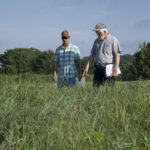
The Center for Native Grasslands Management (CNGM) at the University of Tennessee is looking for two seasonal field research technicians to assist graduate students with their research projects for the…

UTIA Dogwoods Usher in the Season
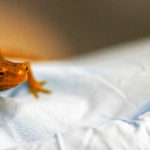
Newly published paper addresses transmission of the pathogen Bsal and how mathematical models are used to predict how the pathogen would spread among eastern newts.
Eight Week Literacy in Nature Initiative Features Four Books by Local Authors

Guidelines to Personalize Your Plate and Enjoy Nutritious Meals

Interested Producers Should Plan to Attend March 11 Webinar

Delaney Foster, a UT Department of Plant Sciences doctoral student, studies at the West Tennessee AgResearch and Education Center and researches herbicide resistance. Photo courtesy of Delaney Foster.
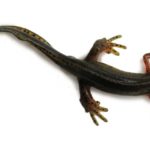
Eastern newt populations in the northeastern United States and southeastern Canada are at greatest risk of infection with a new skin-eating fungus, Batrachochytrium salamandrivorans (Bsal), according to a study published February 18 in the open-access journal PLOS Pathogens by Matthew Gray of the University of Tennessee Institute of Agriculture, and colleagues.